Ilene Gienger-Stanfield was born and raised in Klamath County, Oregon, on her parents’ ranch in the open range and farmland near the Klamath/Modoc Indian reservation. She was drawing from an early age — a sixth-grade moment copying a Santa picture in Chiloquin is her first memory of being excited by what a mark could do. She went on to Southern Oregon University in Ashland, where she earned her fine arts degree, then continued her education studying pastel with Harley Brown — the most significant influence on her work — and oil with Catherine Kehoe. She works from a studio in the hills of Southern Oregon near Phoenix, where she holds weekly figurative sessions and teaches private lessons and national workshops.
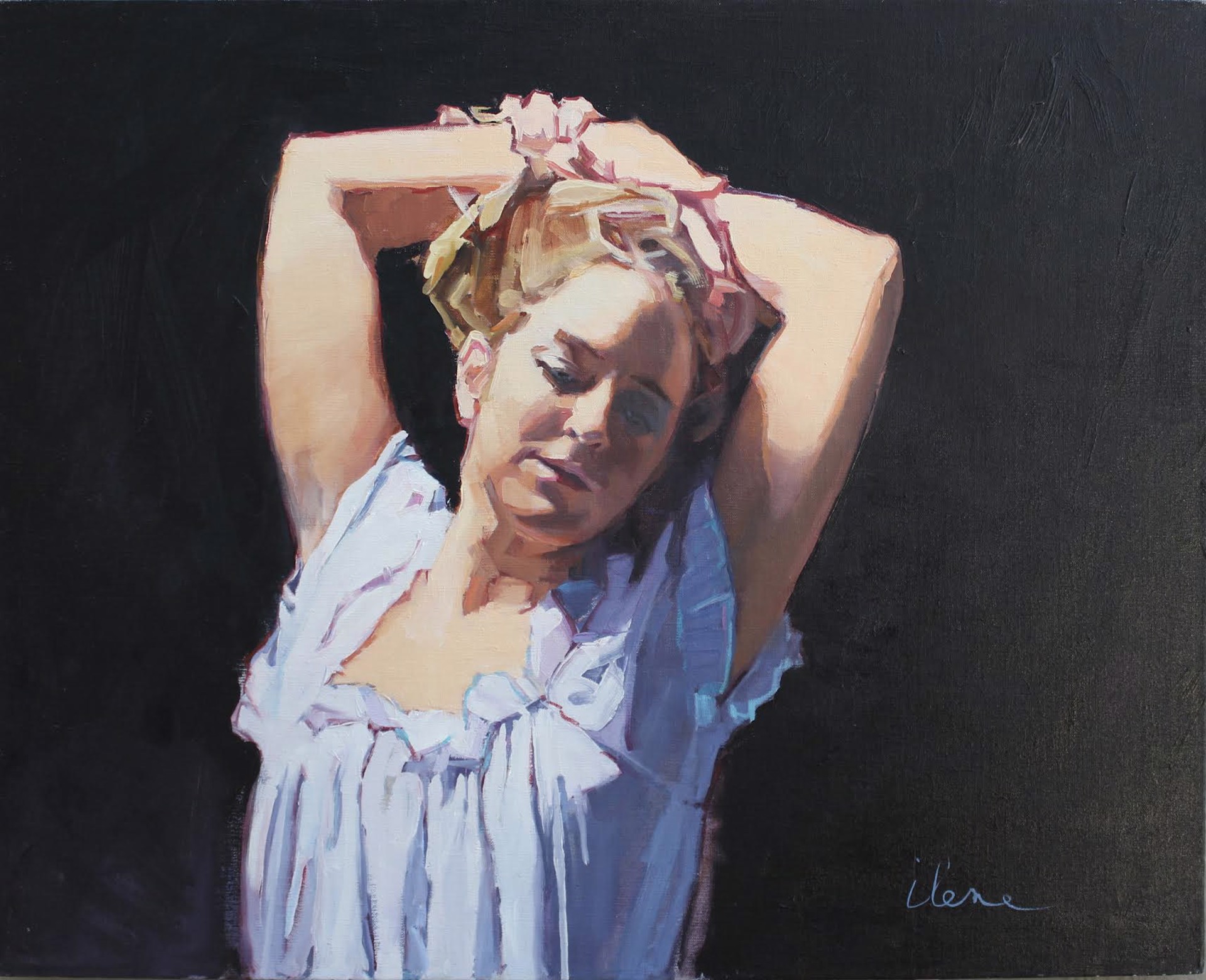
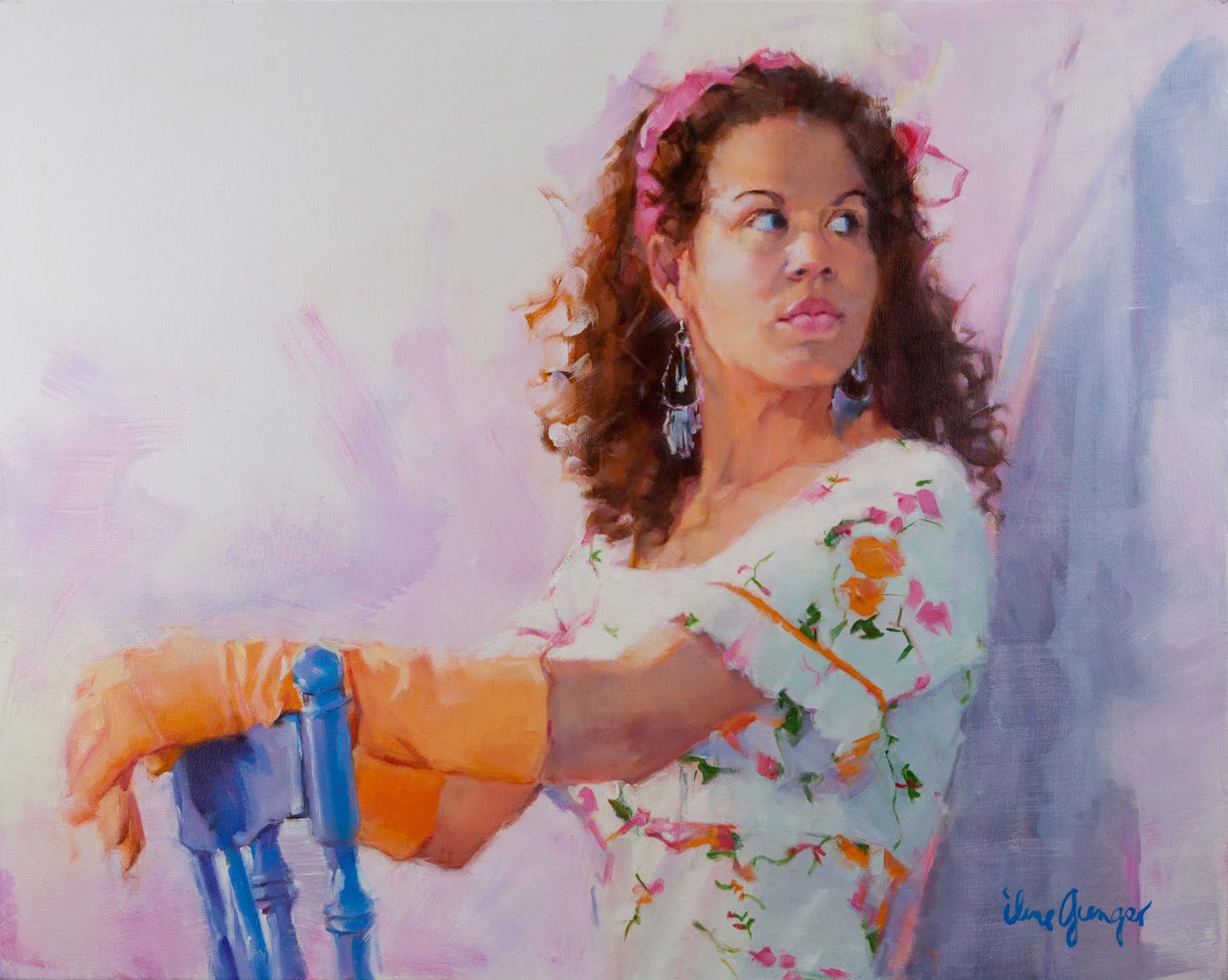
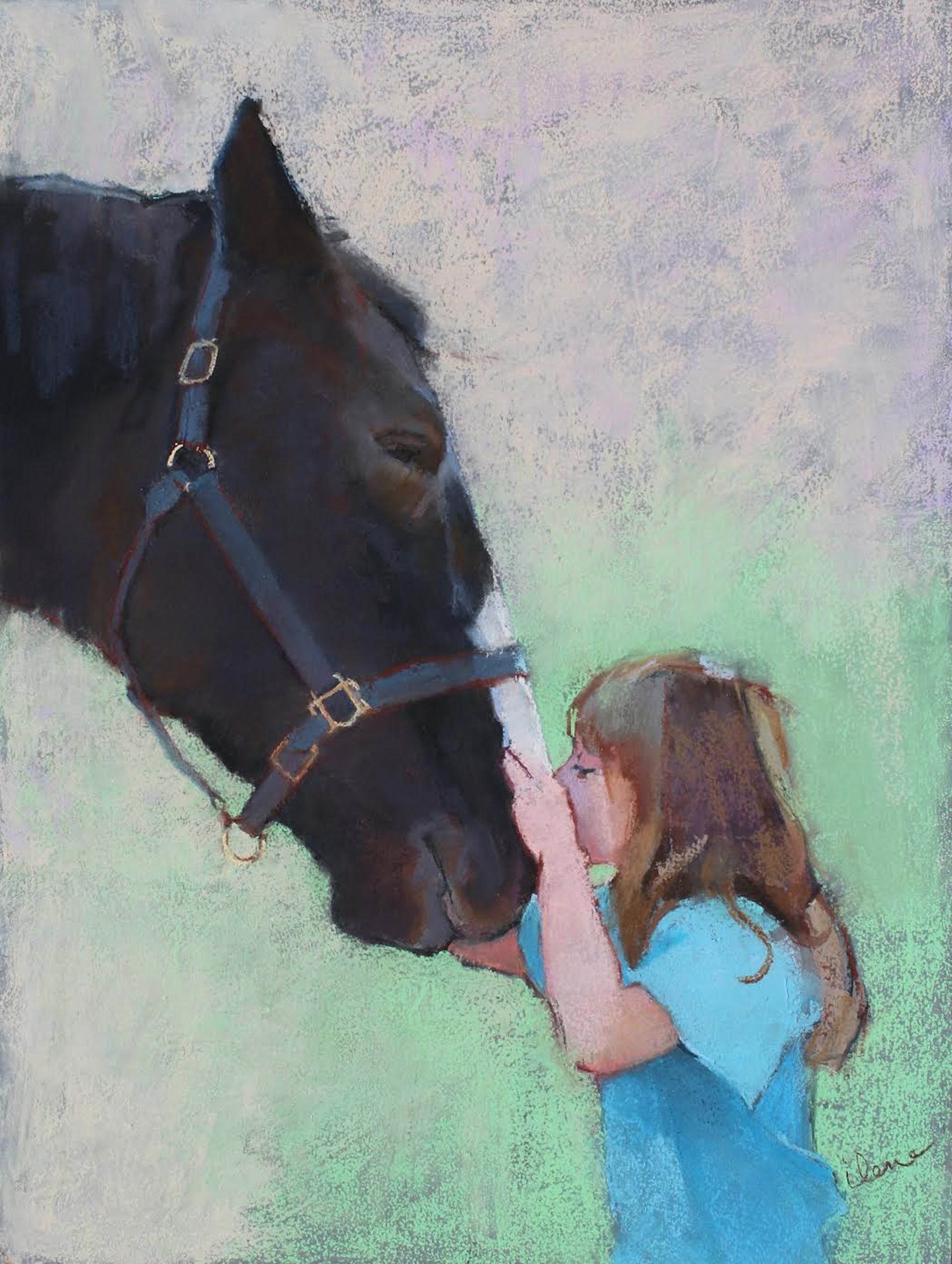
Her subject is the human figure, and her method is to paint shapes rather than objects. She often does not know what she is painting until those shapes cohere into a recognizable subject — a woman at a ball, two figures leaning toward each other, a person caught in a private moment. “Start with truth, then manipulate it,” she has said. In Full Moon, The artist employs bold contrasts between warm peach-toned flesh and cool lavender shadows, allowing thick impasto strokes to model the figure's musculature and create tactile surface variation across the canvas. The composition positions the female figure centrally against near-total black, with her raised arms and tilted head establishing a vertical thrust that the dark ground refuses to soften or contextualize. What strikes as problematic is the work's reliance on conventional femininity—the soft ribbon, the graceful pose—to convey introspection, suggesting the artist hasn't yet pushed beyond representing female interiority through traditional visual codes. In Belle of the Ball, The artist applies oil paint with loose, directional brushstrokes that dissolve form at the edges—particularly visible in the orange fabric and pink background—while maintaining sharp focus on the subject's contemplative face. Composition positions the figure in three-quarter view against a soft lavender-to-blue ground, with the warm ochre and blue of an unseen chair anchoring her turned posture and creating spatial recession through color temperature shift. The floral-patterned dress contrasts sharply with the painterly abstraction surrounding it, creating an odd tension: the more meticulously rendered garment paradoxically feels less real than the loosely handled flesh and drapery, undermining conventional portrait hierarchy. In Mutual, The painting positions a child in pale blue against luminescent green grass, while a dark bay horse descends from cream-colored wall space above, their heads converging at the canvas's center. Gienger-Stanfield applies paint with visible texture—thick impasto in the horse's mane contrasts with softer, blended brushwork in the girl's face—creating a tactile hierarchy that privileges the animal's physicality. The composition's vertical compression collapses distance between species, yet the girl's upward gaze and the horse's downward turn suggest a moment of genuine exchange rather than dominance, a formal choice that undercuts the typical human-animal subject relationship. The soft edges that define her work are not about vagueness — they are the formal result of painting only the shapes that matter and stopping before the painting becomes a report.
She held a solo exhibition “On Being Human” at Roby King Gallery on Bainbridge Island in September 2021. She has had twelve solo exhibitions and years of group shows and invitationals. Her work has been featured in Southwest Art magazine (February 2013 Emerging Artist), International Artist Magazine (August 2010), The Pastel Journal (2004 and 2025), and Pratique des Arts Magazine (June 2025). Her major recent awards include First Place at the 2024 International Association of Pastel Societies 44th Exhibition, Best of Show at the 2023 Northwest Pastel Society 37th International, and First Place in the 2025 Women Artists of the West 55th Master’s Division.
I am not an elaborate painter. I am more of a journalist who gets right to the point. Start with truth, then manipulate it. Often I do not know what I am painting — only the shapes I am painting. When all those shapes come together, it is a recognizable subject.