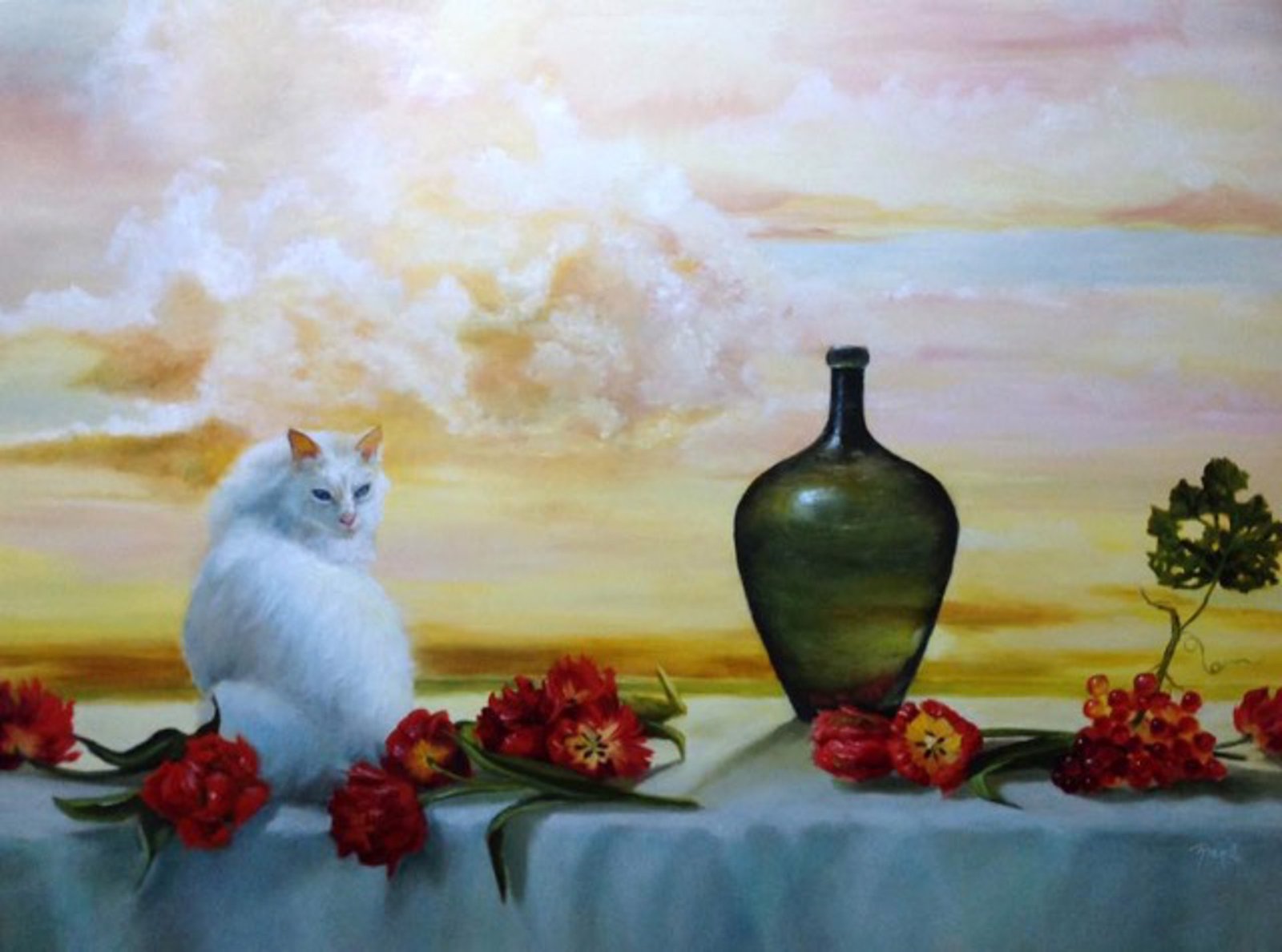
Raenell Doyle · Oil on Canvas — Realist Still Life · Currently at JG Art Gallery
Raenell Doyle
Oil Painter
Realist still life — 17th-century Dutch and Chardin lineage
Raenell Doyle grew up in Mesa, Arizona, and has lived and worked in Washington State for decades — currently in Yelm, where she paints daily in her studio. Her artistic career began in 1988 with the discovery of a book of work by the master watercolorist Sondra Freckelton; she worked in watercolor for eleven years before expanding into oil, which is now her primary medium.
Doyle is known for realist still life — the 17th-century Dutch masters and the French still life painter Chardin are her historical reference points, but the most direct influence on her current painting has been intensive workshops with the modern master David Leffel. She is drawn to fine china, pottery, silver, crystal, and tapestries, and works composition out carefully in her mind across days or weeks before setting up. Maintaining a large garden is part of the same practice: she grows most of the flowers she uses, and lives in a state that gives her access to the fresh fruit she paints.
Raenell's practice, in detail.
Formation & Origin
- OriginMesa, ArizonaGrew up there; natural ability for form from early childhood
- StudioYelm, WashingtonDaily studio practice
- 1988Watercolor begins — under the influence of Sondra Freckelton11 years in watercolor before expanding to oil
Practice & Materials
- MediumOil on CanvasRealist still life; composition worked out in mind over days before setup
- Influences17th-century Dutch masters · Jean-Baptiste-Siméon ChardinHistorical reference points for the still-life tradition
- MasterDavid Leffel — intensive workshopsGreatest direct impact on current painting
- SubjectFine china · pottery · silver · crystal · tapestries · fruit · flowersGrows most of the flowers used in the work
Galleries & Representation
- CurrentJG Art Gallery — Bainbridge Island & Park CityPrimary representation
- Southwest Gallery — Dallas, Texas
Works at JG
- CurrentA selection of oil still-life paintingsSizes from intimate to substantial; price published with each piece
As featured in.
Selected works.
A current selection of Raenell's oil still-life paintings — the 17th-century Dutch and Chardin tradition, rendered in contemporary practice — is available through JG Art Gallery. Write to the gallery for current pieces, dimensions, and indicated price.
The gallery responds within one business day.
For current availability, pricing, or to commission new work, write directly. Worldwide shipping, payment plans, full provenance documentation.