Tamera Abaté grew up in the wheat fields of the Columbia Basin in Eastern Washington — under vast open skies, watching the ever-changing color of fields that stretched to every horizon. She now lives and works in a mountain valley in north central Washington, in the Methow region, with horses and dogs and as much time outdoors as possible. Her medium is encaustic — one of the oldest painting techniques in existence. The ancient Greeks called it “to burn in.” The Fayum mummy portraits, painted in Egypt in the first through third centuries AD, are the most famous surviving examples. Jasper Johns returned the medium to serious contemporary painting in the 1950s, and his encaustic paintings are now in the permanent collections of MoMA and the Whitney. Abaté works in that lineage — beeswax, tree sap, and pigment, sometimes in as many as thirty stacked layers, each fused with the heat of a propane torch.
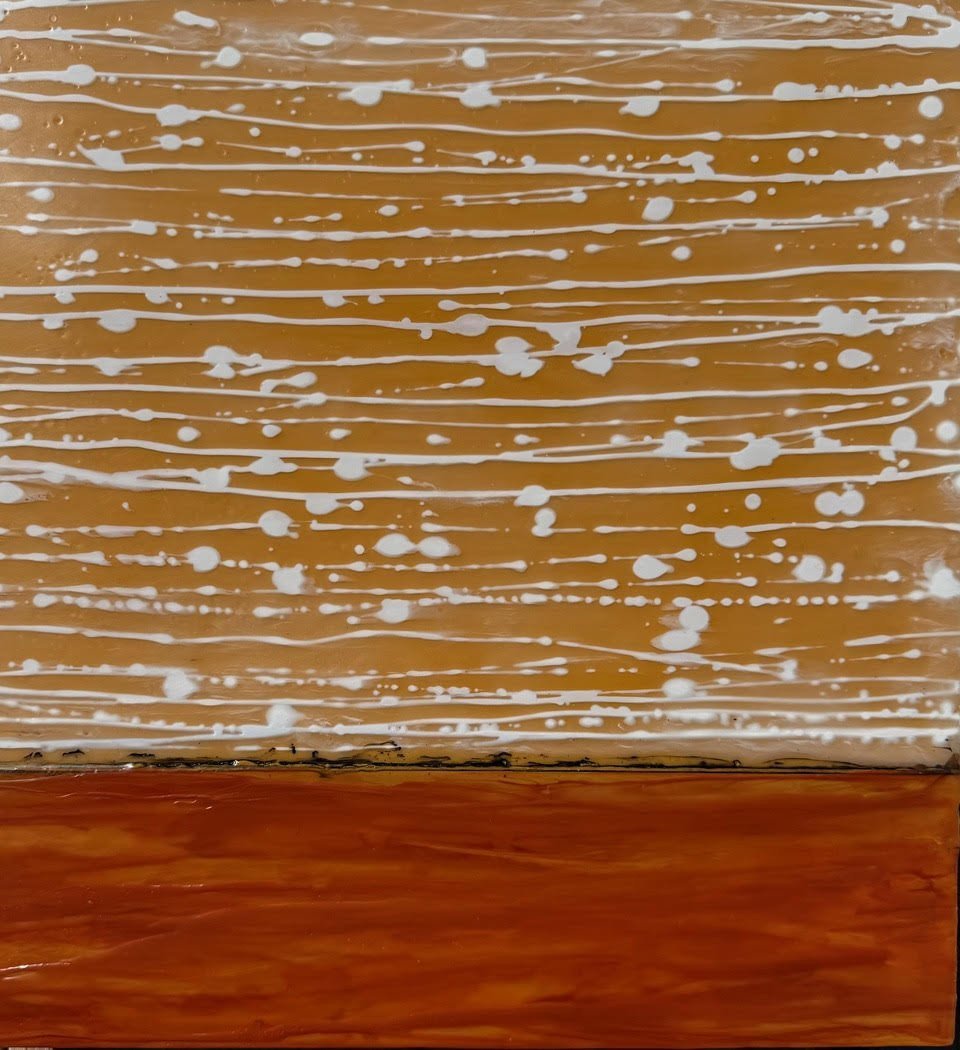
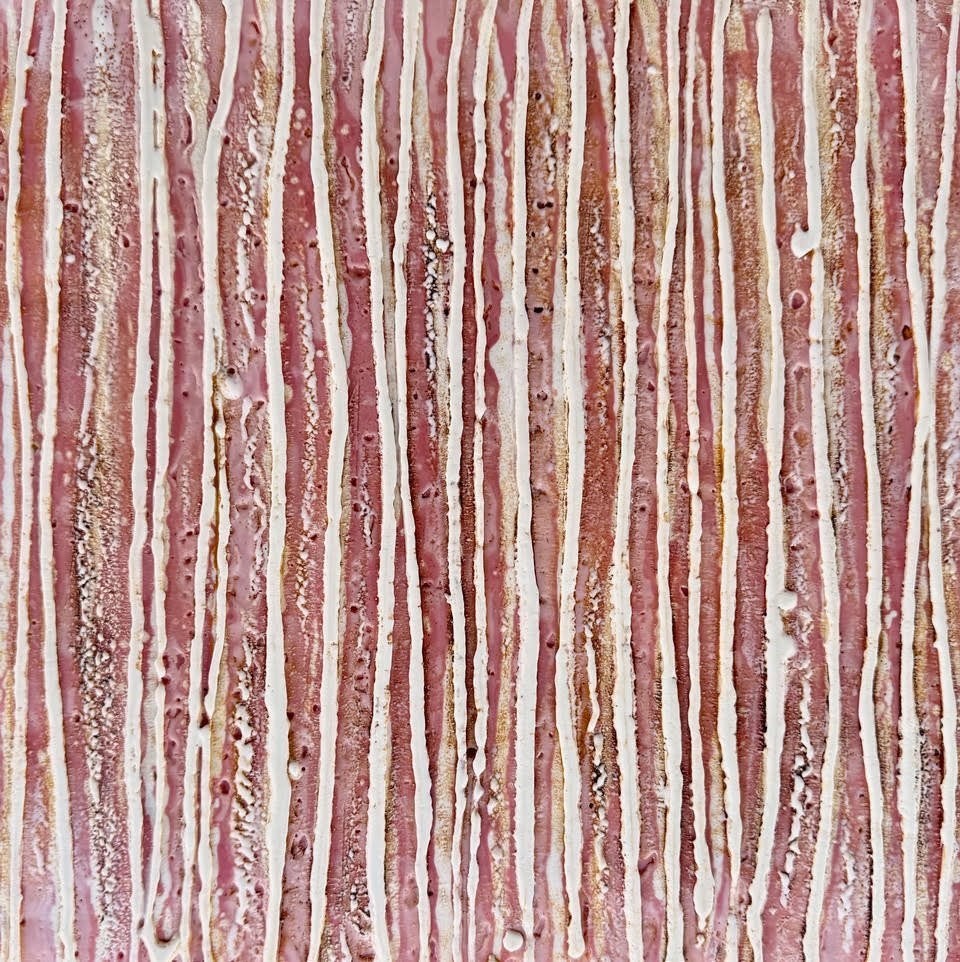
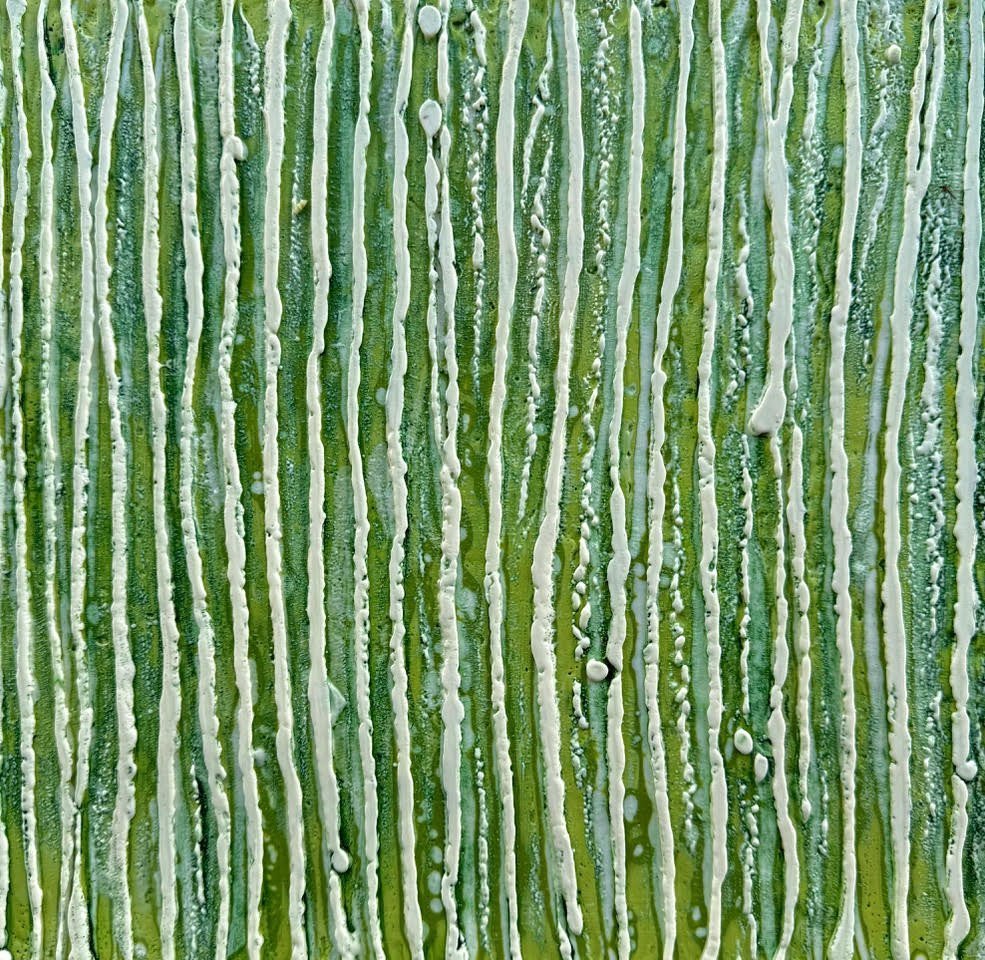
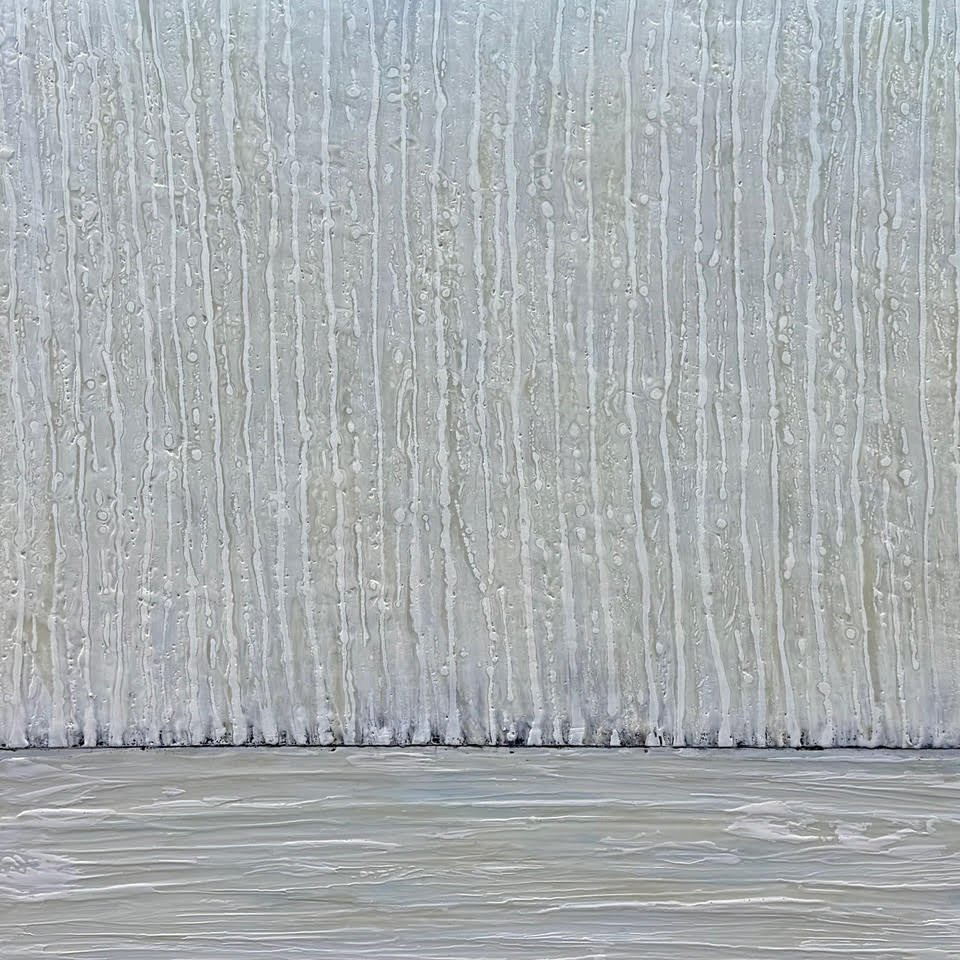
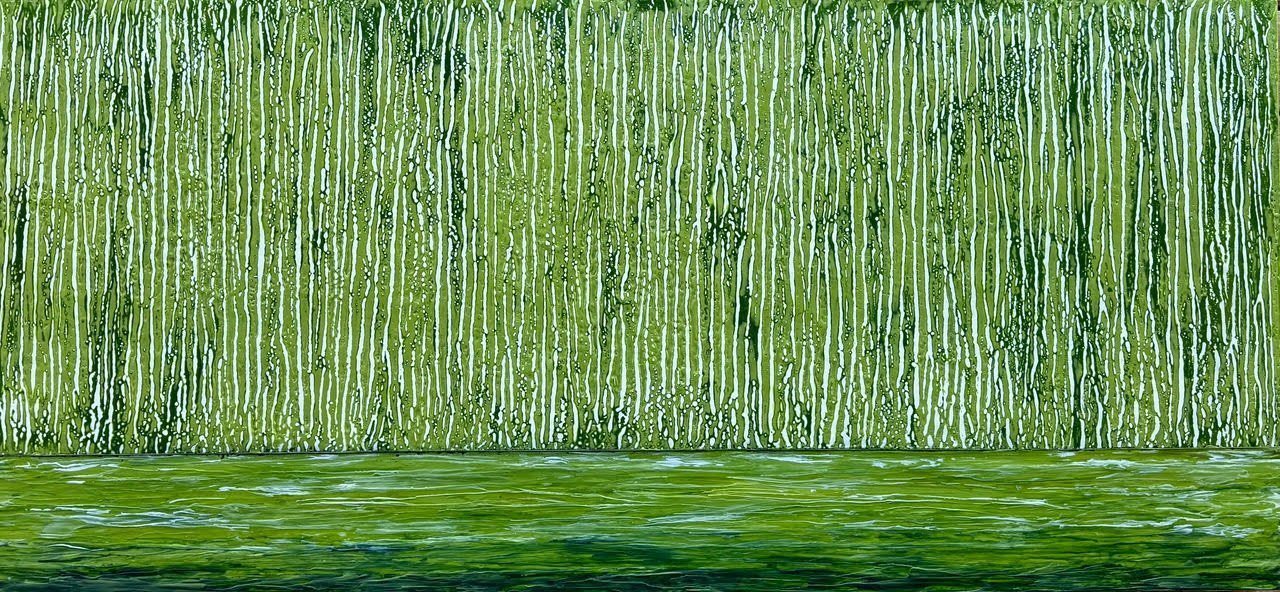
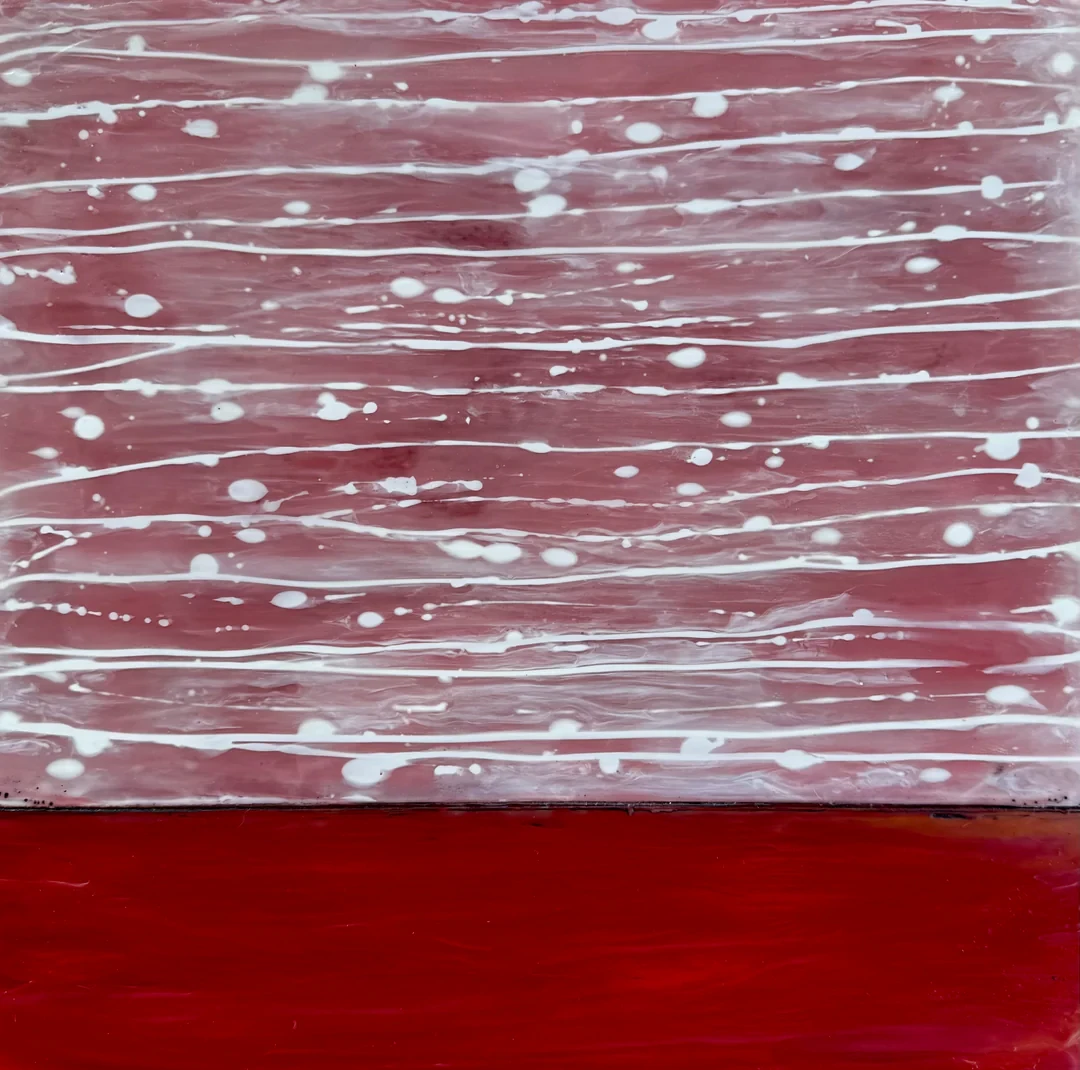
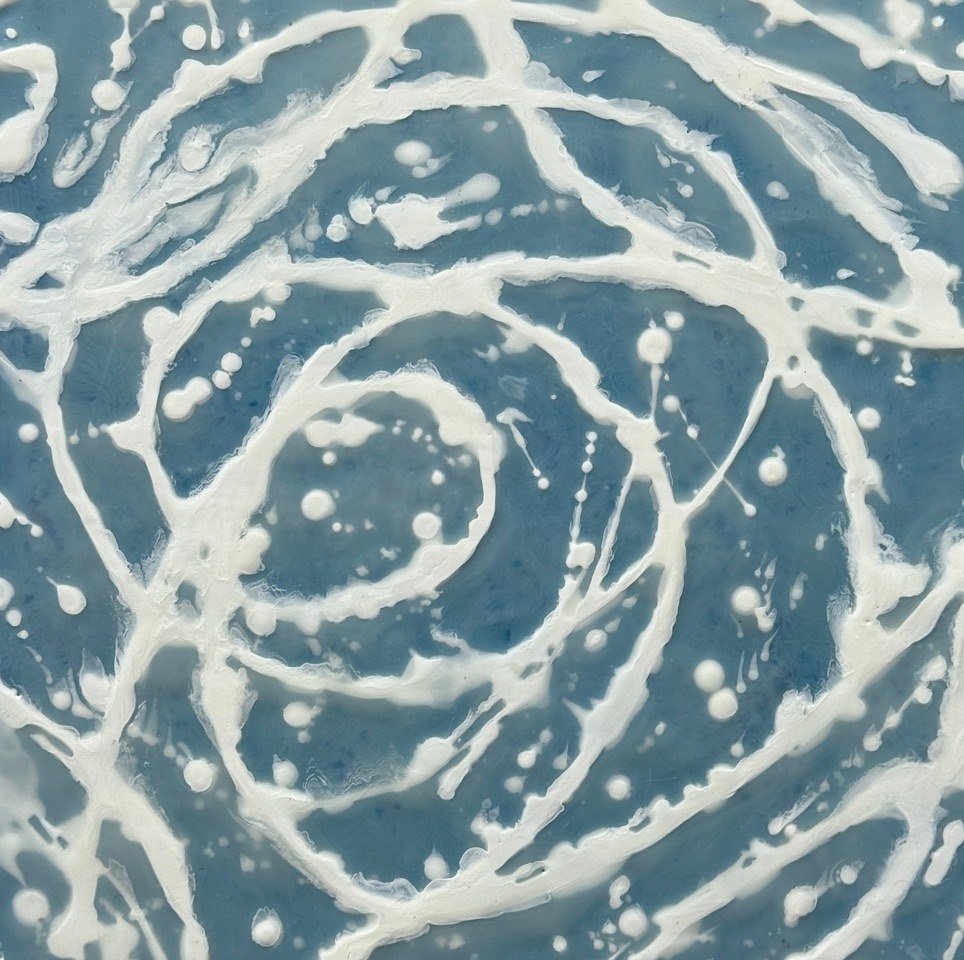
The process is not illustrative. She does not draw a landscape and fill it in. The heat determines where colors go — the torch causes layers to meld, run, resist, and merge in ways that cannot be fully predicted. What emerges is an image that is simultaneously abstract and rooted in landscape: the horizon line is always present, even when nothing in the painting is literally a field or a sky. She attributes this to her childhood in the Columbia Basin — the dynamic of a horizon line separating yet pairing enormous fields of color is, she says, something she responds to in every painting she makes. The layers in her work range from atmospheric to subterranean: looking at a finished surface is something like looking down through clear water at multiple planes below. In Sanctuary, The vertical striations—built through successive applications of pigmented wax—layer sage and chartreuse over deeper forest tones, with white-gray washes applied last sitting atop rather than integrated, creating a palimpsestic surface where the torch has softened edges into feathered gradations while leaving thin lines of unmolten wax as deliberate resistance. The composition hovers between abstraction and landscape: the dense reed-like verticals read as a stand of marsh grass or grain field viewed at water level, yet the flattened plane and painterly mark-making resist literal representation. The encaustic medium here becomes a liability of sorts—the translucence and fugitive quality of melted wax diffuses rather than sharpens the image, making what might be a precisely rendered memory of the wheat fields instead blur into something closer to collective impression than individual place. In Living In Peace, The surface accumulates thirty thin strata of translucent wax in graduated grays and blacks, with bands of pale blue-green pooling beneath the darker layers, creating depth through selective opacity rather than overpainting—the torch work scorches edges into sharp vertical striations that read as both weathered cliff face and pure gestural mark. The composition simultaneously refuses landscape (it is fundamentally about wax behavior and heat) and insists upon it, the columnar formations too deliberate, too rooted in horizontal water planes to escape representational pull. The encaustic medium ultimately works against the title's promise of peace: the material's demand for heat and intervention, its perpetual vulnerability to remelt and collapse, makes the surface feel provisional rather than settled. In Milk Moon, The vertical striations emerge from accumulated wax layers—cream and gray pigments pooling unevenly beneath translucent whites—while the torch's heat has softened edges into slight bleeding and pooling at the base, creating a horizon line where the geometric top registers as sky or curtain and the smooth bottom as water or receding field. The work hovers between non-representation and landscape specificity: those vertical lines read simultaneously as abstracted grain stalks, rain on glass, or pure formal repetition, anchored only by the artist's biographical tie to Eastern Washington agriculture. The encaustic medium itself enforces a peculiar compression—the multiple layers suggest depth, yet the material's translucence and tendency toward surface-level pooling flatten what might otherwise recede, making the painting simultaneously volumetric and obstinately present.
She has held solo exhibitions at Contemporary Fine Arts Gallery in La Jolla, California (2023 and 2024), at Barrister Winery in Spokane (2024, “It’s All Energy”), and at Confluence Gallery in Twisp, Washington. She has been shown at the Art Spirit Gallery in Coeur d’Alene, Idaho, the Wenatchee Valley Art Museum, and Gray Sky Gallery in Seattle. Her work has been published in Cloth Paper Scissors magazine and in Patti Digh’s book Life is a Verb. She was featured artist in Methow Arts Magazine in 2019.
My primary focus is on fields of color — noticing where one color meets another, how they relate to one another, how texture affects these fields. There is a visible energy that pushes and pulls a painting into its completion. The process of working with wax takes my curiosity on an adventure into the unknown: mixing colors, adding multiple layers of molten wax with a propane torch, incising, scraping, and letting the material lead.