Julie Anne Mann · Mixed Media · Sculpture · Forest Portraits · Currently at JG Art Gallery
“It's a working artists' school, a great school model.”
Selected works.
A current selection from Julie's work, available through JG Art Gallery. The gallery responds within one business day with placement, dimensions, and indicated price for the work in question.
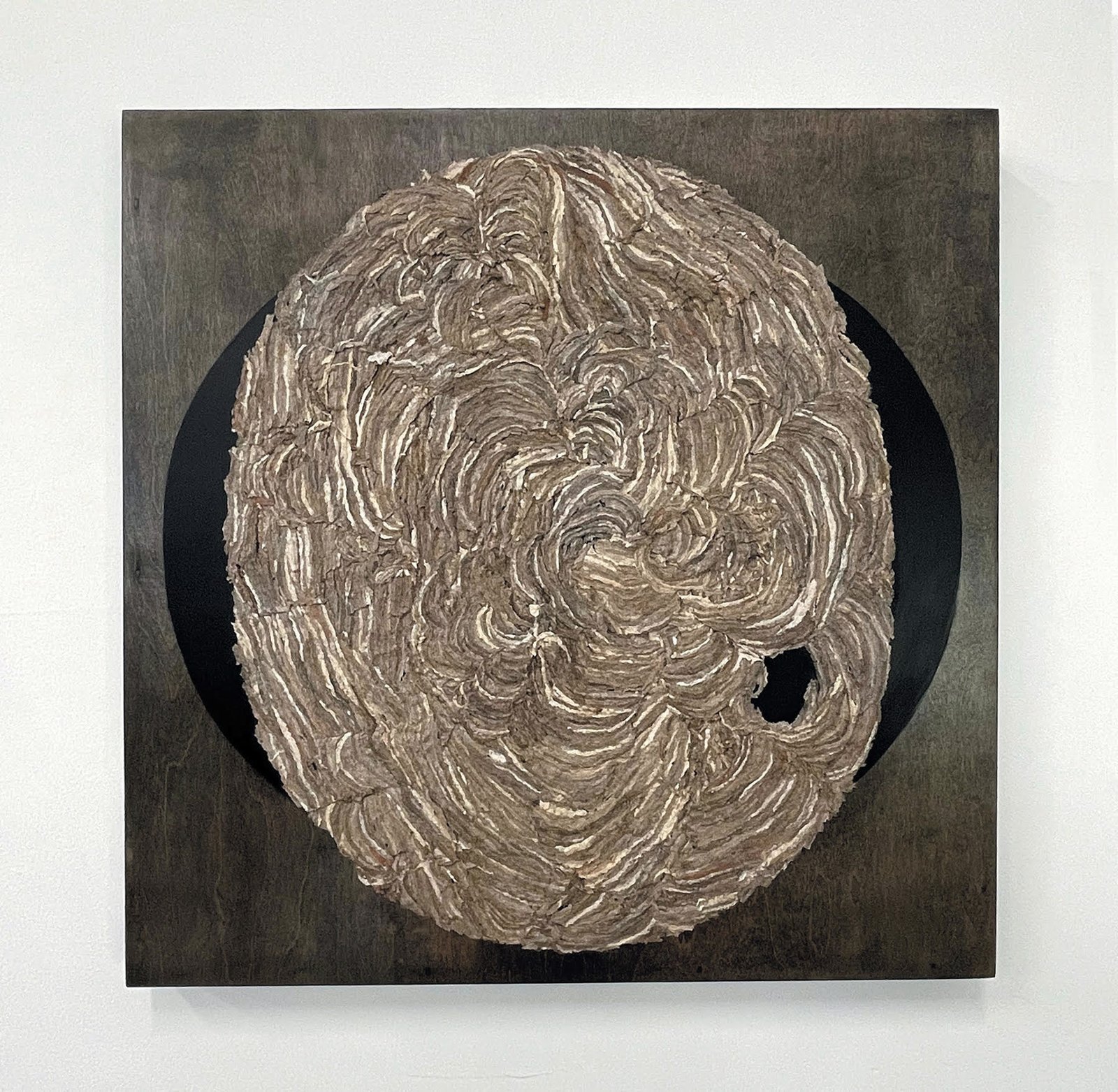
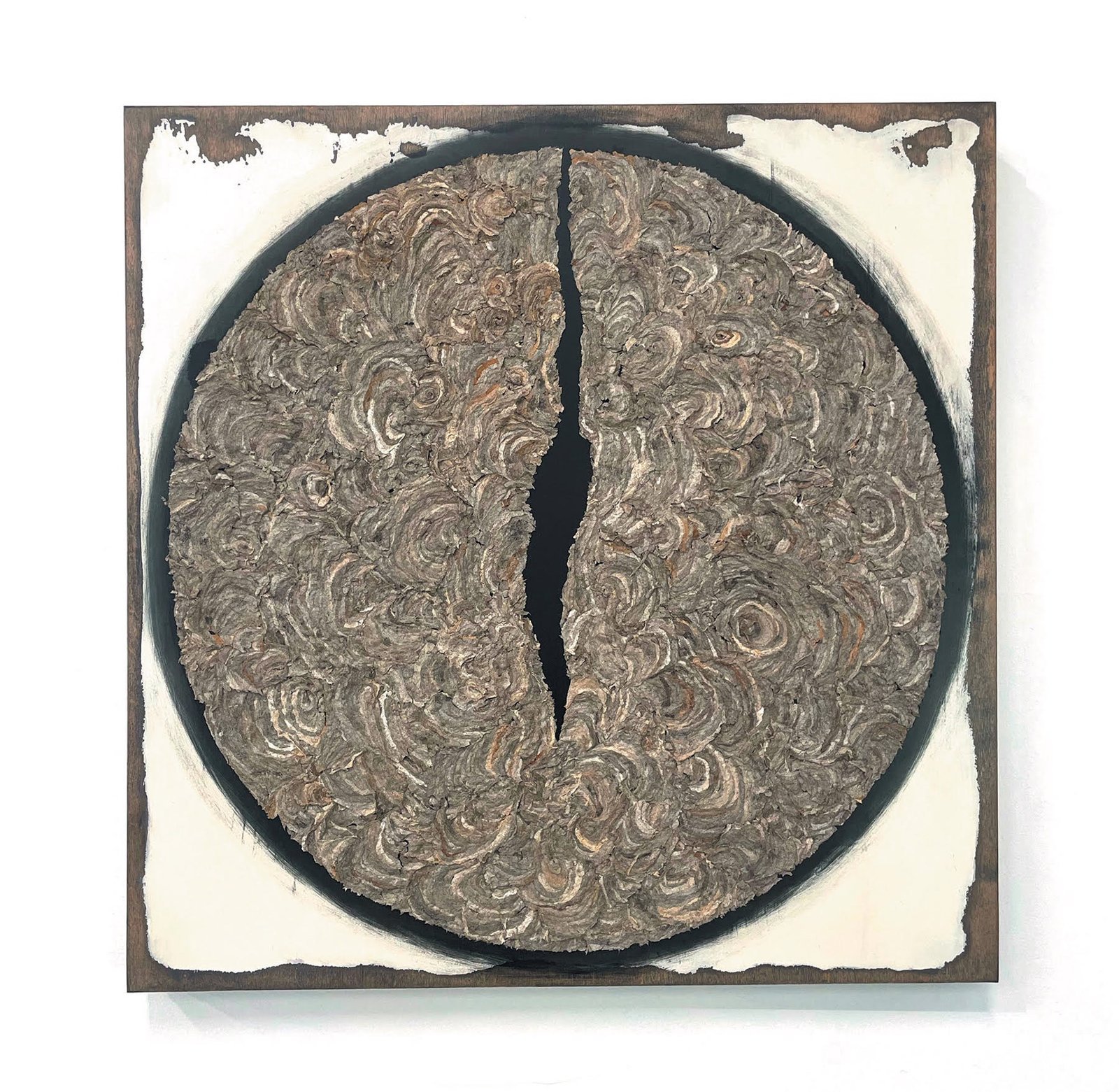
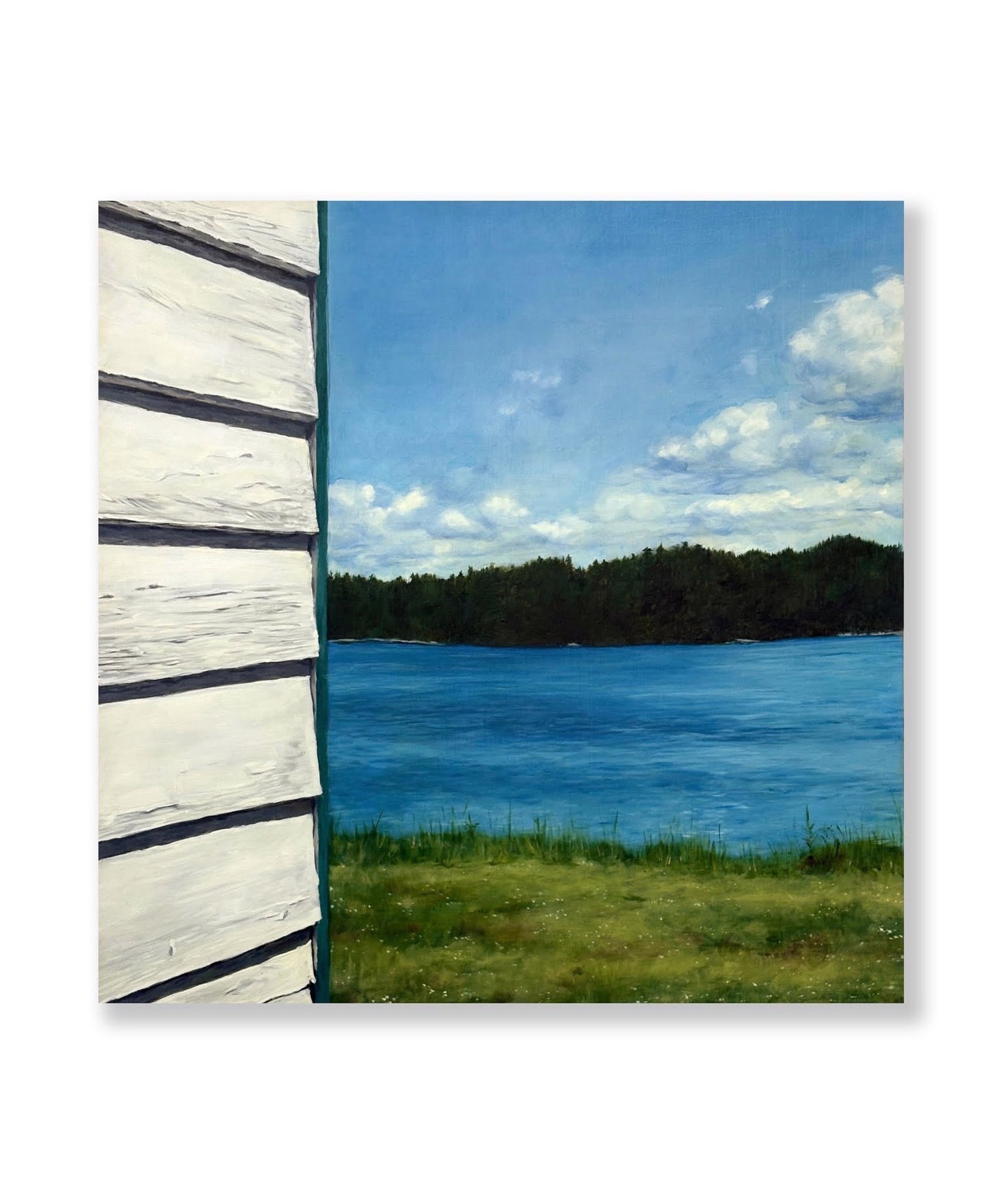
Julie Anne Mann lives and works in the Pacific Northwest, returned to the region after twenty-five years studying and working in New York. She is a graduate of The School of Visual Arts (SVA) in New York, and her work has been exhibited throughout the United States.
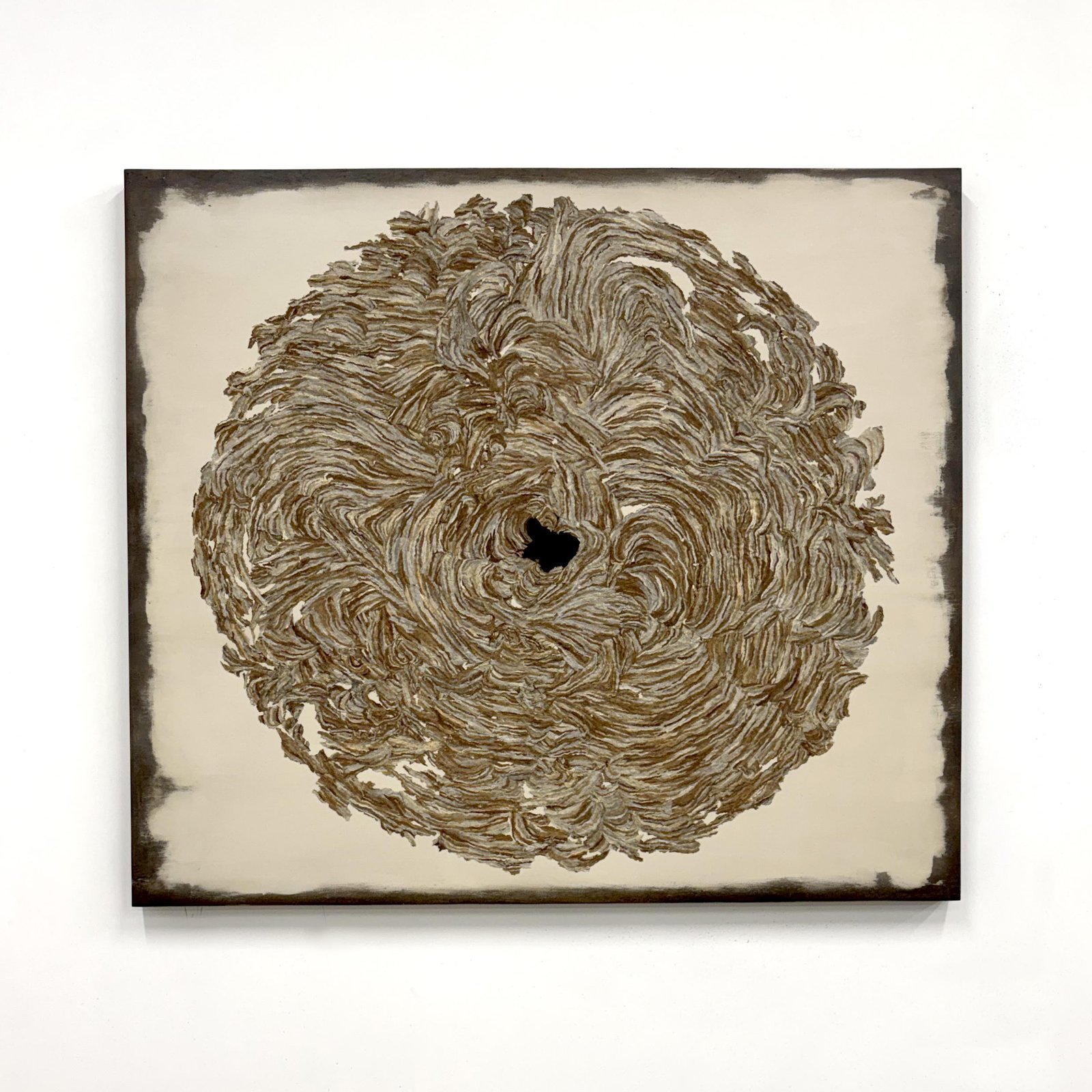
Julie Anne Mann works in natural materials — devil’s claw seed pods, wasp nests, Canadian goose feathers, water chestnuts, dandelion seed, Queen Anne’s Lace in resin, slippery elm seed on linen, maple leaf skeletons. The materials are not neutral: each carries its own biological logic, and Mann uses that logic to address parallels in human nature. Her practice consistently moves between the botanical and the anthropological, weaving in botanical lore to examine the push-pull between human presence and the natural world.
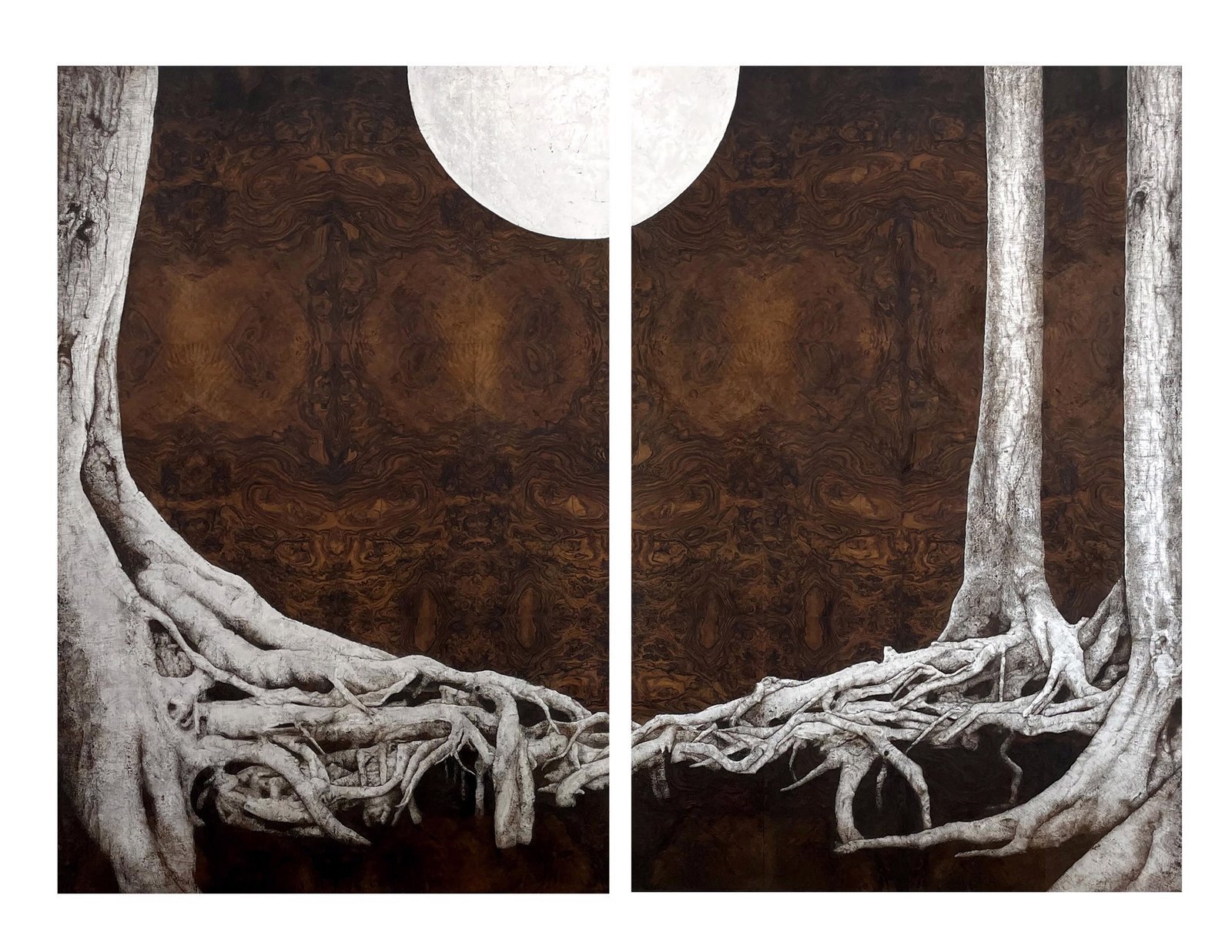
In her Forest Portrait series, book-matched walnut burl panels serve as ground. Mann applies silver leaf, then uses a cross-hatching technique to draw the twisted, gnarly forms of Pacific Northwest trees from the material itself. The series has been exhibited at the Garrison Art Center and Lake George, New York. She returned to the Pacific Northwest after twenty-five years studying and working in New York, where she earned her degree from the School of Visual Arts.
Julie's practice, in detail.
Origin & Education
- BFASchool of Visual Arts (SVA), New YorkSculpture and mixed media — formal training in a working-artists' school
- NYTwenty-five years studying and working in New York
- ReturnReturned to the Pacific NorthwestLives and works in the region the trees portray
Awards & Residencies
- ResidencyI-Park Foundation Residency ProgramEast Haddam, Connecticut
- ResidencyWeir Farm Art Center Residency ProgramWilton, Connecticut
- GrantNew York City Department of Cultural Affairs GrantNew York, NY
Selected Series
- SeriesForest PortraitBook-matched walnut burl panels · silver leaf · cross-hatching technique revealing twisted Pacific Northwest tree shapes
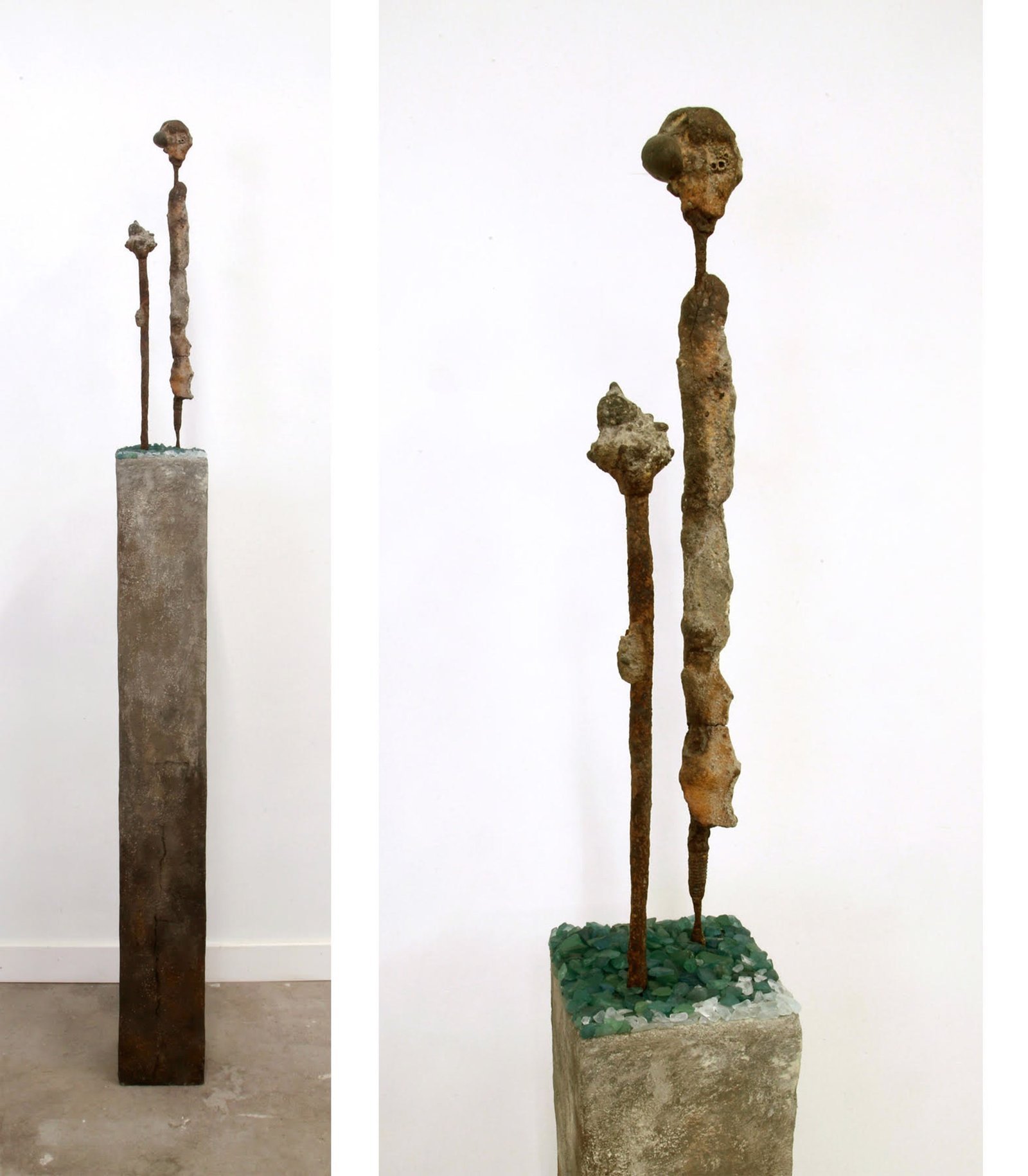
- SeriesSalvaged LandscapesReclaimed glass jugs from Dead Horse Bay, Queens, with Pacific Northwest driftwood — environmental commentary
- SeriesBotanicalsMandala compositions from natural specimens — Devil's Claw and other foraged elements
Materials & Method
- SubstrateWalnut burl, wood panelBook-matched panels become the field for the work
- SurfaceSilver leafApplied as ground; cross-hatching exposes the dark beneath
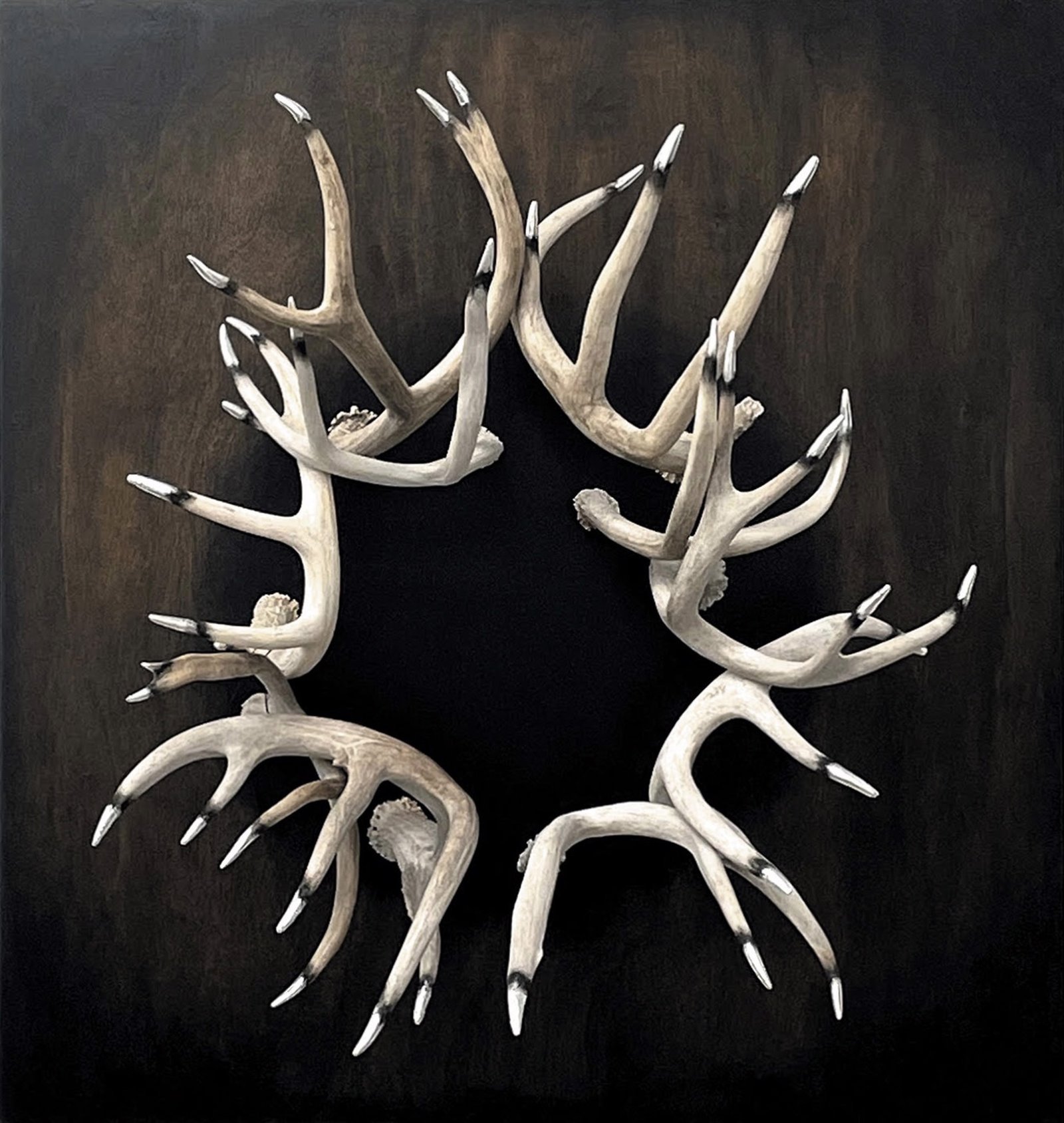
- FormDeer antler · charcoal · natural specimensAnthropomorphic subjects rendered through their own materials
Themes
- SubjectHumanity and the natural worldThe relentless push and pull — botanical lore and allegory
- SourceOld-growth temperate forestsOlympic Peninsula source photography for the Forest Portrait series
Galleries & Currently
- PastRoby King GalleryBainbridge Island legacy — alumna of the gallery JG Art Gallery acquired and continues
- PastGarrison Art CenterGarrison, NY — Rooted exhibition
- PastGallery 66 NYCold Spring, NY
- OngoingJG Art GalleryBainbridge Island & Park City
As featured in.
The gallery responds within one business day.
For current availability, pricing, or to commission new work, write directly. Worldwide shipping, payment plans, full provenance documentation.